
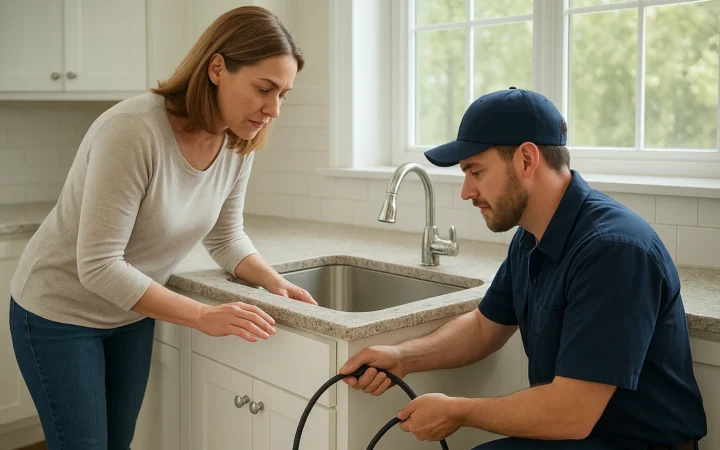
Drain Cleaning in Franklin, WI: How to Prevent Clogs and Protect Your Plumbing
A properly functioning drainage system removes wastewater efficiently from sinks, showers, tubs, and household appliances. When a drain becomes clogged, water can move slowly, unpleasant odors can develop, and everyday tasks become frustrating. Ignoring these symptoms can allow a blockage to worsen or reveal a deeper problem within the plumbing system. Understanding what causes clogs and when professional attention is necessary helps protect your home from avoidable plumbing complications. For homeowners who need drain cleaning in Franklin, WI, early intervention is particularly useful when several fixtures begin draining slowly or recurring blockages appear. Hair, grease, soap residue, food particles, and foreign objects can accumulate inside pipes. Outdoor drainage lines can also develop problems because of root intrusion, damaged pipes, or accumulated debris. Identifying the source helps determine the most appropriate cleaning method. Warning Signs of a Clogged Drain Drain problems often begin with subtle changes before developing into complete blockages. Slow-Draining Water If water takes longer than usual to disappear from a sink, bathtub, or shower, debris might be restricting the pipe. A single slow fixture can indicate a localized clog, while several affected fixtures might point to a problem in a shared drain or main sewer line. Gurgling Sounds Bubbling or gurgling noises can indicate restricted drainage or changes in air movement through the plumbing system. These sounds deserve attention when they occur alongside slow drains or unusual water movement. Unpleasant Odors Persistent sewer-like smells near drains can result from plumbing problems, dry drain traps, or other conditions that allow odors to enter the home. Cleaning the drain might help with some causes, but recurring odors require investigation to identify the underlying issue. Multiple Backed-Up Fixtures When toilets, tubs, or sinks in different areas of the house drain poorly at the same time, the problem might involve a larger shared line. Stop using affected fixtures if wastewater begins backing up, especially when sewage is involved. Contact a qualified plumber promptly to limit exposure and prevent additional water damage. Common Causes of Household Drain Blockages Different drains collect different materials, so prevention begins with understanding what enters each pipe. Kitchen drains: Cooking grease, oils, food scraps, and starchy residues can accumulate inside pipes. Grease may flow while hot but cool and adhere to pipe surfaces as it travels through the system. Bathroom drains: Hair, soap residue, shaving products, and other personal care materials frequently collect near drain openings and inside traps. Toilet drains: Excessive toilet paper and items that should not be flushed can create blockages. Products labeled flushable do not necessarily break down as readily as toilet paper. Outdoor and sewer lines: Tree roots can enter existing cracks or joints in underground pipes. Shifting soil, pipe deterioration, and accumulated debris can also restrict wastewater flow. Identifying the material responsible for a blockage helps determine whether routine cleaning, mechanical removal, or additional inspection is needed.…