A yellow or brown discoloration on your wall may appear insignificant, but water-stained drywall typically indicates an underlying moisture problem that requires attention. Painting over the stain without identifying the moisture source only delays the inevitable recurrence of the problem. Identifying and resolving the moisture source must come first; only then should you engage a qualified professional for drywall repair in Coralville, IA.
What Water Stains Can Tell You Related: Retaining Wall Permits in Stewartville, MN: Height Requirements and What Triggers Approval
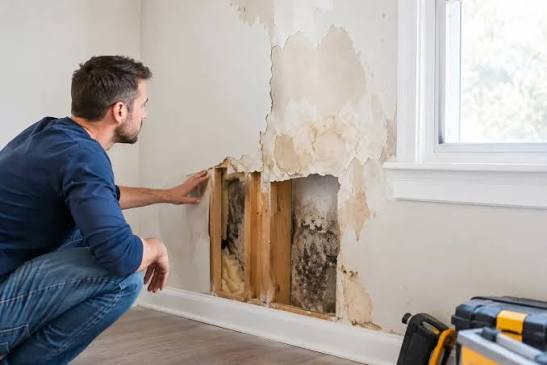
Water stains typically appear as yellow or brown discoloration that may expand following heavy rainfall, recur after painting, or present alongside bubbling paint, peeling finishes, or a persistent musty odor. Drywall absorbs moisture rapidly; once saturated, it softens, swells, and loses the structural integrity necessary to maintain its form and function.
The challenge is that the visible stain rarely indicates the precise point of water intrusion. A roof leak can migrate along framing members before manifesting on your ceiling, while a plumbing leak can extend significantly beyond the pipe itself. Think of the stain as a clue rather than a diagnosis. Even when the surface feels dry to the touch, the framing or insulation behind it may still be holding moisture. If the moisture source cannot be identified, a licensed plumber or roofing contractor should conduct an inspection before any patching work commences.
Common Sources of Moisture in Coralville Homes Related: After the Storm, What Really Needs Your Attention at Home
Damaged shingles, deteriorating flashing, leaking supply lines, improperly sealed windows, and appliance overflows are among the most common moisture sources. Coralville’s seasonal temperature swings can also push condensation into walls and ceilings where ventilation or insulation falls short. Bathrooms, kitchens, basements, and laundry rooms all carry higher risk. Knowing where the moisture originated determines which trade needs to be called first.
Why Patching Too Soon Can Backfire
Joint compound and fresh paint may conceal a stain, but they will not stop active moisture migration within the wall assembly. If the moisture source remains active, the stain will recur, and the new patch will blister, crack, or delaminate from the surface. Worse, moisture that lingers behind the wall slowly damages the framing and insulation, turning what started as a surface repair into a much larger project. Related: The Heart of the Home: Creating a Living Room That Feels Just…
Ongoing dampness also creates conditions where mold can develop on organic materials. While not every water stain indicates mold presence, a persistent odor or ongoing wall softness warrants evaluation by a qualified mold assessor.
What a Proper Investigation Should Include
Start by noting when the stain appeared and checking the area carefully for soft spots, sagging sections, peeling paint, or related staining nearby. A wall that looks dry is not always dry. A professional will use a moisture meter pressed against the drywall or inserted into the framing, to confirm whether hidden moisture remains before any repair begins. Related: How Small Businesses Can Balance SEO, Outsourcing, and Growth
The leak or moisture source needs to be fixed before any surface work starts. Next, determine whether the affected drywall can be dried in place or whether sections require complete removal and replacement. Any mold contamination must be remediated before new materials are installed. Once the area is thoroughly dry and the underlying issue resolved, professional drywall repair in Coralville, IA, will restore damaged sections, achieve a smooth surface, and prepare the area for primer and paint. Most residential walls use a Level 4 finish, tape embedded, two coats over joints. Under bright light or glossy paint, specify Level 5 with a full skim coat so the patch disappears. The extent of repair required depends on actual structural damage, not merely the visible size of the stain.
When to Arrange Drywall Repair
Schedule a professional assessment when a stain recurs after painting, expands over time, feels soft when pressed, or appears alongside bubbling paint or persistent odor. If moisture has reached areas near electrical outlets or fixtures, maintain a safe distance and contact qualified professionals immediately. Active leaks require prompt attention rather than a wait-and-see approach.
Key Takeaway
Water-stained drywall warrants thorough investigation before any repair work begins. Identifying the moisture source prevents stain recurrence, limits the extent of damage, and addresses moisture problems before refinishing seals them within the wall cavity. Related: When Water Treatment Problems Can’t Wait: Knowing What to Do Next
Once the leak is resolved and the area has dried out fully, drywall repair in Coralville, IA, can restore the surface. Following the proper sequence protects both your home’s appearance and its structural integrity.