There’s a moment in almost every home — usually when you’re scrubbing the same white spots off the shower glass for the tenth time — when you pause, stare at the streaks, and think, Why is my water doing this to me?
It’s a small, frustrating moment that usually sends people down a rabbit hole they never expected. Suddenly you’re Googling water hardness, reading articles you never imagined caring about, and holding your glass up to the light like a detective examining evidence.
Water seems so simple, but the truth is, the water running through your pipes has its own personality. Sometimes gentle. Sometimes stubborn. And often, the thing responsible for all the little annoyances around the house isn’t dirt, bad cleaning products, or your shower… it’s minerals.
Where the Questions Begin
At some point, nearly everyone in a hard-water region asks themselves: what is calcium in water, and why does it show up everywhere I don’t want it? Related: What a Good Water Treatment Installation Really Looks Like in Trinity
Calcium is a naturally occurring mineral picked up as water moves through soil and rock. It’s not harmful — in fact, it’s essential for your body — but it can be annoyingly aggressive around the house. When water has high levels of calcium, we call it “hard water,” and that’s where all the residue and buildup come from.
The concept sounds simple, but living with it feels anything but.
The Sneaky Ways Hard Water Makes Life Harder
Calcium in water is one of those problems that doesn’t show up all at once. It creeps into your routines in subtle ways until one day you realize half your cleaning habits exist solely because of your water.
You start noticing things like:
- Soap that refuses to lather
- Hair that feels heavier or dull
- Skin that feels dry after every shower
- Dishes with stubborn white spots
- Faucets collecting chalky crust
- Laundry that never feels soft
- A water heater that sounds tired
Each issue alone seems minor, but together? They start to feel like a constant uphill battle. And that’s when the curiosity turns into a desire for actual solutions.
Why Calcium Ends Up in Your Water at All
The funny thing is, calcium isn’t the villain — it’s simply doing what minerals do. As water passes through layers of earth, it naturally picks up dissolved minerals like magnesium and calcium. This is especially common in regions with limestone or chalky soil formations. Related: Why Softer Water Can Make Everyday Life Feel a Little Easier
If the water is coming from a well, hardness can be even higher because groundwater stays in contact with rock longer. If it’s from a municipal supply, the hardness depends on the source — rivers, reservoirs, underground aquifers — each bringing its own mineral recipe.
So when someone mentions calcium in water, what they’re really talking about is the natural fingerprint of where that water came from.
The Way It Changes Everyday Experiences
You might not think water hardness matters… until you notice how it affects the little things you do every day.
Showers become less relaxing because your skin never feels clean or smooth afterward. Hair products seem less effective. Soap scum forms faster. Cooking pans collect dull spots. Even your favorite t-shirt feels scratchy after a few washes.
These aren’t dramatic problems, but they chip away at your comfort. And once you’ve lived with softer water, you understand just how much difference water can make.
When Homeowners Start Looking for Fixes
Eventually, most people dealing with hard water start exploring ways to reduce mineral buildup. That’s usually where the idea of a water softener calcium solution appears — not because of pressure from ads or trends, but because people want their homes to feel easier to maintain. Related: Finding the Right Water Treatment Solution for a Cleaner, Healthier Home
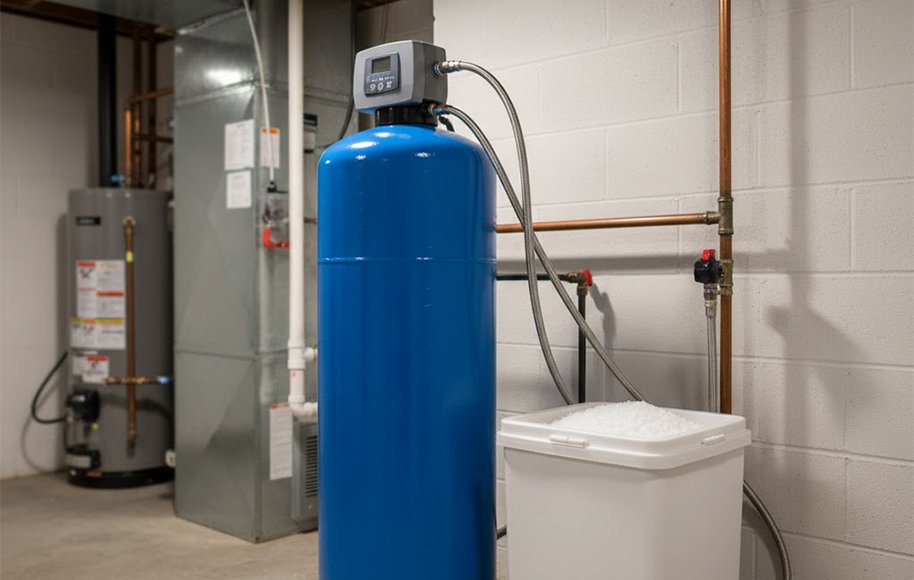
A water softener doesn’t remove every trace of calcium, but it does significantly reduce hardness by swapping calcium and magnesium ions for sodium or potassium ions. The result? Water that feels smoother, tastes clearer, and behaves far better with soap and appliances.
It’s one of those investments that quietly pays you back in time, convenience, and overall home comfort.
The Science, Explained Without a Textbook
If the chemistry behind hard water feels confusing, don’t worry — most homeowners feel the same way at first. The simplest way to understand it is this:
Hard water has too many minerals.
Softened water has fewer minerals.
Calcium itself isn’t bad. But inside pipes, water heaters, or washing machines, it’s like that guest who overstays their welcome. It settles. It hardens. It builds up. And over time, it quietly stresses out your appliances, shortening their lifespan and increasing energy usage. Related: Why Cleaner Water Changes the Feel of a Home More Than People…
It’s not dramatic — just quietly expensive.
How Softer Water Changes Everything
Once someone installs a softener or filtration system, the difference is almost immediate. Soap actually works the way it should. Hair feels lighter. Skin doesn’t itch. Glasses sparkle. And cleaning becomes less of a daily battle.
The biggest change, though, is the feeling of ease. You stop fighting your water and start enjoying it again. Your home feels calmer. Even the shower — that everyday ritual — feels better.
It’s amazing how something so ordinary can affect your life in so many ways.
But It’s Not Just About Comfort
Better water also protects your home. Water heaters last longer. Pipes stay clearer. Appliances run more efficiently. You spend less time scrubbing and descaling.
People often underestimate the long-term cost of hard water until they see the damage firsthand — a clogged pipe, a failing dishwasher, a water heater full of sediment. A softener doesn’t prevent every issue, but it dramatically reduces them.
It’s a quiet investment that keeps paying off.
A Calm Ending Thought
Calcium in your water isn’t something to panic about — it’s simply part of nature. But that doesn’t mean you have to live with all the annoying side effects. Understanding what’s happening behind the scenes is the first step toward reclaiming comfort in your home. Related: The Part No One Talks About: Keeping Your Water System Working Like…
Because at the end of the day, water should make life easier, not harder. It should clean, refresh, hydrate, and support your daily routines without leaving a trace behind. And once you experience water that feels soft, gentle, and effortless, you’ll wonder how you ever lived any other way.