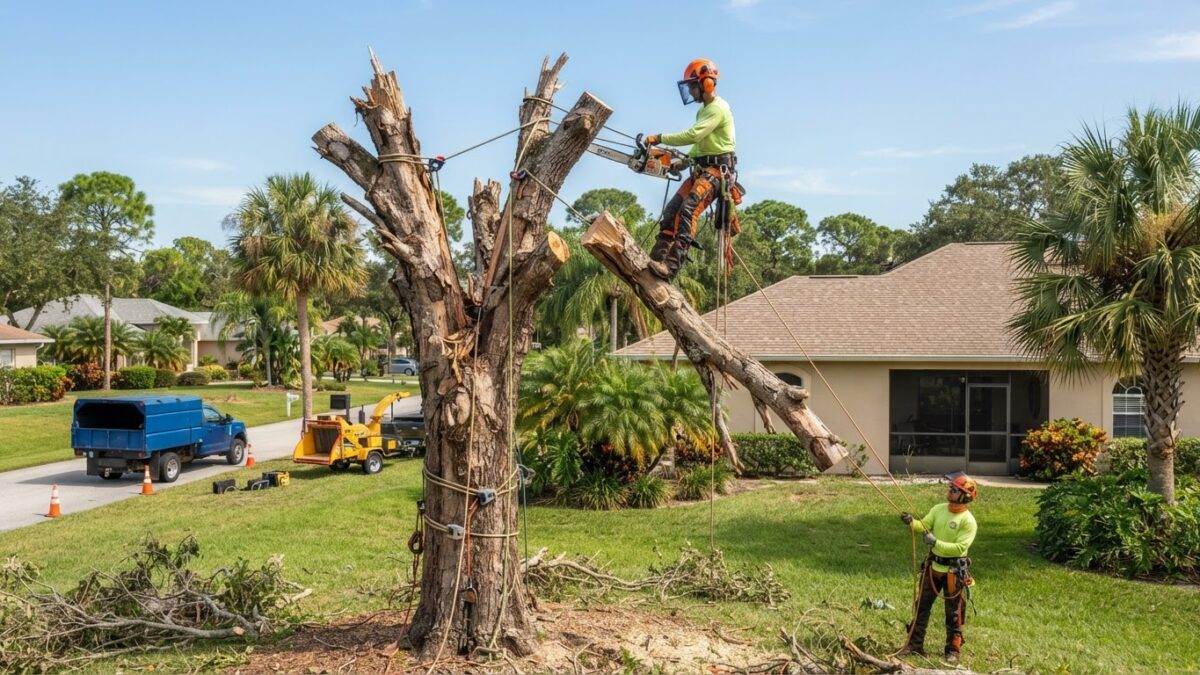
Severe weather, weakened branches, and unstable tree trunks can create unexpected hazards for homeowners in Lakeland, Florida. Strong winds and heavy rainfall can cause trees to lean, branches to break, or entire trees to fall onto roofs, driveways, fences, and power lines. Even without a major storm, internal decay and damaged root systems can make a tree dangerous. Recognizing these warning signs early helps you make informed decisions about protecting your family and property.
When a tree presents an immediate safety risk, emergency tree removal in Lakeland, FL provides a way to address the hazard before it causes further damage. The appropriate response depends on the tree’s condition, its proximity to structures, and the surrounding environment. Understanding when to seek professional assistance, what to do while waiting, and how to prevent future problems helps you respond more confidently during a tree emergency.
When Does a Tree Become an Emergency?
Not every damaged tree requires immediate removal. However, certain conditions indicate that professional assessment should not be delayed.
Trees Leaning Suddenly
A tree that develops a new lean after heavy rain or strong winds might have a compromised root system. Raised soil around the base, exposed roots, or cracks in the ground can indicate that the tree is becoming unstable.
Stay away from the tree and keep others clear of the surrounding area. Do not attempt to straighten or secure a large tree yourself. Related: Water Damage Repair in Bellingham, WA: Steps to Protect Your Home
Large Broken or Hanging Branches
Broken branches suspended above roofs, walkways, parking areas, or entrances can fall without warning. These hazards become especially concerning when the damaged branch is large or remains partially attached to the tree.
Avoid walking beneath hanging branches. Have a qualified tree professional evaluate the situation and determine whether removal or other corrective work is appropriate.
Trees Damaged by Storms
Lakeland experiences seasonal thunderstorms and periods of heavy rainfall. Hurricane season in Florida officially runs from June 1 through November 30, bringing an increased risk of damaging winds, heavy rain, and falling trees. Strong winds can split trunks, break major limbs, and damage roots, leaving trees structurally compromised.
A tree that appears upright after a storm is not necessarily safe. Hidden cracks and root damage can increase the risk of failure later.
What to Do When a Tree Poses an Immediate Threat
Your first priority should be safety, not cleanup.
Follow these steps when you identify a potentially dangerous tree:
A. Keep family members, visitors, and pets away from the affected area.
B. Move vehicles away from the potential fall zone if it is safe to do so. Related: Drain Cleaning in Franklin, WI: How to Prevent Clogs and Protect Your…
C. Do not climb the tree or attempt to cut heavy branches.
D. Photograph visible damage from a safe distance for documentation. These photographs can also support a homeowner insurance claim if the tree has damaged an insured structure. Document the damage before cleanup when it is safe to do so, and contact your insurance provider to confirm your policy’s coverage and claim requirements.
E. Contact a qualified tree professional for an urgent assessment. A certified arborist has recognized professional credentials in tree care and can help assess structural hazards and recommend appropriate action.
F. If a tree contacts electrical wires, stay far away and contact the utility company or emergency services as appropriate.
Never approach a fallen tree that is touching a power line. Treat every affected wire as energized, even when it appears inactive.
If a tree has damaged your home, avoid entering areas with visible structural instability until they have been assessed.
How Professional Emergency Tree Removal Works
Emergency tree work requires careful planning because damaged trees can behave unpredictably. Related: What a Good Water Treatment Installation Really Looks Like in Trinity
Initial Assessment
The professional evaluates the trunk, branches, root system, nearby buildings, and potential hazards. The assessment helps establish a safe removal strategy and identify any restrictions caused by power lines, narrow access points, or unstable structures.
Controlled Removal
Depending on the circumstances, the crew might remove branches in sections before dismantling the trunk. Specialized equipment and rigging techniques help control how heavy pieces are lowered.
The method depends on the tree’s size, structural condition, location, and available working space.
Debris Management
Once the immediate hazard has been addressed, the remaining branches and trunk sections can be processed and removed according to the agreed scope of work.
Debris hauling is commonly offered as part of tree removal, but its inclusion depends on the service agreement. Stump grinding is generally a separate service unless specifically included in the estimate. Confirm whether debris hauling, stump grinding, and additional cleanup are included before authorizing the work, because emergency tree removal does not automatically include every follow-up service.
Why Local Conditions Matter in Lakeland
Central Florida’s combination of heat, humidity, seasonal storms, and rainfall creates specific challenges for tree maintenance. Prolonged moisture can contribute to some forms of decay, while storms can expose weaknesses in branches and root systems.
Trees growing in restricted planting areas or near driveways might also have limited space for healthy root development. Construction activity, soil compaction, and changes in drainage can affect tree stability.
Regular inspections help identify developing problems before severe weather makes them more dangerous. Related: Why Softer Water Can Make Everyday Life Feel a Little Easier
Preventing Future Tree Emergencies
Although not every tree failure is predictable, routine maintenance reduces avoidable risks.
Consider these preventive measures:
A. Schedule professional inspections for mature or visibly damaged trees.
B. Remove dead or broken branches when recommended.
C. Monitor trees for fungal growth, trunk cracks, and changes in their lean.
D. Avoid damaging roots during excavation or landscaping.
E. Maintain appropriate clearance around buildings and frequently used areas.
F. Seek professional advice when a tree shows signs of declining health.
Avoid excessive pruning or cutting large limbs without the necessary experience. Improper work can weaken a tree and create additional hazards. Related: Finding the Right Water Treatment Solution for a Cleaner, Healthier Home
Conclusion: Respond Quickly to Dangerous Trees
A damaged or unstable tree can threaten people, buildings, vehicles, and outdoor spaces. Recognizing warning signs and responding promptly helps reduce the risk of injury and additional property damage.
If a tree is leaning unexpectedly, has split major limbs, or threatens a structure, keep your distance and arrange a professional assessment. For immediate electrical or structural hazards, contact the appropriate emergency service first. Before hiring a tree removal company, confirm whether it offers emergency assessments outside regular business hours and ask for an estimated response time. Actual availability and arrival times depend on the provider, weather conditions, and the severity of the emergency. Taking the right precautions helps protect your Lakeland property and supports safer outdoor spaces throughout the year.